INTEGRATED ANALYSIS & MODELING

SETAF2018: Integrated Geotechnical Analyses and Graphical Modeling

Manage the entire process on a single platform, from soil profiling to the most complex retaining structure and slope stability analyses. SETAF2018 transforms your raw data into instant graphs and reportable engineering outputs.
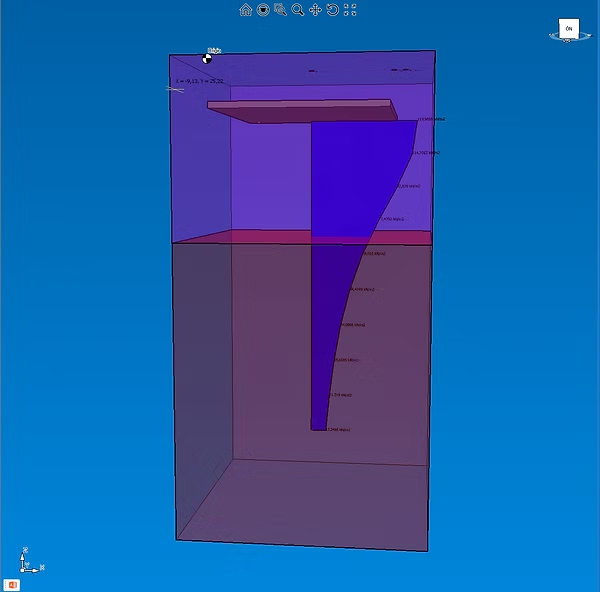
SETAF2018 Dynamic Modeling
📊 INSTANT DATA VISUALIZATION

In geotechnical design, accuracy begins with proper data visualization. SETAF2018 automatically graphs borehole data and SPT/CPT results, allowing you to use this data simultaneously in all your analyses.
SETAF2018 Graphical Data Management
INSTANT DATA VISUALIZATION
DATA TERMINAL

1. Dynamic Soil Profile and Graphical Data Management

Manage soil data, the foundation of your analyses, with professional graphs and dynamic diagrams, freeing yourself from manual calculation burdens.

📈
Borehole and Test Graphs Automatically calculate SPT N1,60 and net limit pressure (PL*) values to prepare depth variation graphs.
🧬
Physical and Mechanical Variation Monitor the variation of parameters such as Atterberg limits and unit weight with depth using dynamic graphs.
Stress Diagrams Create effective stress and pore water pressure diagrams, considering capillary/artesian effects.
SOIL-STRUCTURE INTERACTION

2. Advanced Foundation and Settlement Analyses

Model load transfer and settlement behavior in shallow and pile foundations using the most precise numerical methods. Base your design on scientific data to construct safe structures.
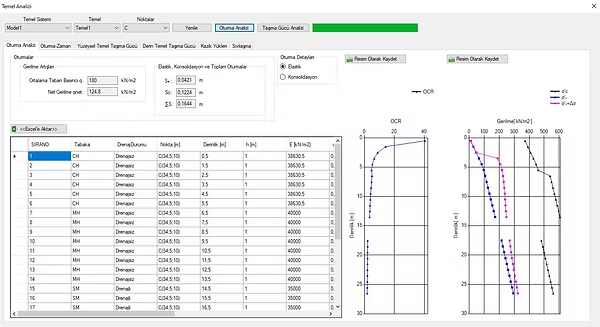
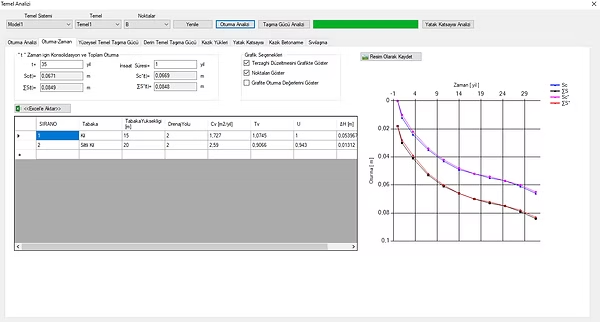
🏗️
Load Transfer (Boussinesq & Mindlin) Flawlessly model load distribution in shallow foundations with Boussinesq, and in pile systems with Mindlin–Geddes equations.
Interactive Settlement Analysis Analyze immediate and consolidation settlements in seconds via Terzaghi-corrected Settlement-Time Graphs.
⚖️
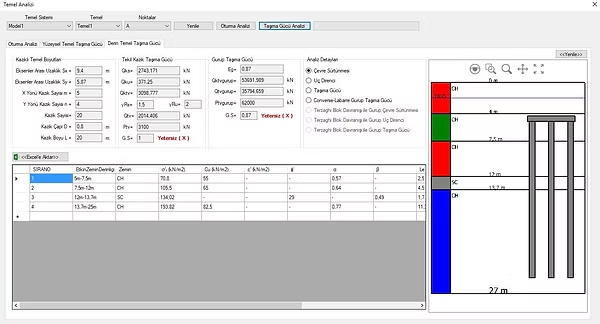
Comprehensive Bearing Capacity Methods Perform calculations compliant with regulations, from Terzaghi to Eurocode 7, and using α, β, λ methods for deep foundations.
SETAF2018 Foundation Analyses
NUMERICAL ANALYSIS SUPPORT
SETAF2018 Liquefaction and Improvement
TBDY 2018 & AFAD INTEGRATION
EARTHQUAKE & IMPROVEMENT

3. TBDY 2018 Liquefaction and Ground Improvement Design

Analyze soil behavior under earthquake effects according to current regulations and develop improvement strategies. Manage liquefaction risk with scientific methods.

🌊
Automatic Liquefaction Analysis TBDY 2018 compliant liquefaction calculations; safety factors (FS) variation with depth is graphed instantly.
🏗️
Comprehensive Improvement Models Calculate bearing capacity and settlement improvements using Jet Grout, Deep Mixing (DSM), Stone Column, and Rigid Pile methods.
📊
Critical Depth Query Determine the effect of liquefiable layers on the superstructure and optimize required improvement depths.
STAGED CONSTRUCTION ANALYSIS

4. Support Systems and Phased Construction Simulation

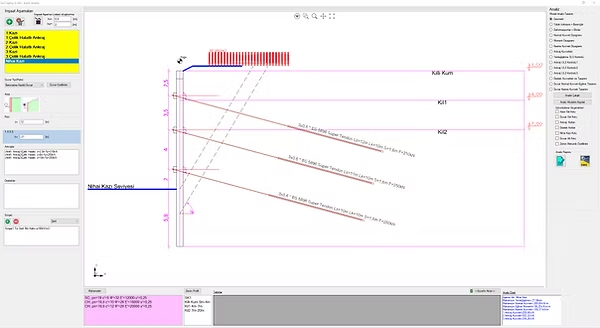
Create realistic retaining structure designs with the Coupled Pressures Method. Simulate wall-soil interaction and construction stages step-by-step with Winkler spring assumption.
📐
Elasto-Plastic Modeling Solve all construction stages, from excavation to anchor stressing, individually using the Matrix-Displacement method.
📈
Staged Analysis Reports Instantly graph displacement, moment, and shear force diagrams for each stage.
Static and Dynamic Checks Perform Mononobe-Okabe earthquake analysis and reinforced concrete calculations (TS500) with full integration.
SETAF2018 Retaining Structure Simulation
WINKLER SPRING MODEL

The safety of slopes and embankments is measured by the accurate detection of the most critical slip surface. SETAF2018 minimizes the risk of overall failure by simulating the riskiest scenarios in seconds with Limit Equilibrium Methods.
SETAF2018 Slope Stability Analysis
AUTOMATIC OPTIMIZATION
STABILITY ANALYSIS

5. Slope Stability and Slip Surface Optimization

Test slope safety with Bishop and Fellenius slice methods. Find the most critical slip surface in seconds with automatic search algorithms.

📐
Advanced Limit Equilibrium Methods Determine precise safety factors for each layer using Bishop and Oms-Fellenius slice methods.
🔄
Automatic Surface Optimization Automatically find the surface that yields the minimum safety factor (FS) among circular and polygonal slip surfaces.
Quick Transition from Retaining to Slope Model Convert your retaining model to a slope model with a single click to instantly perform overall failure (external stability) analyses.

Technical Analysis and Visualization Matrix

From soil data to final diagrams; manage all calculation processes with professional outputs.

FeatureSETAF2018 SolutionGraphical Output / Diagram
LiquefactionTBDY 2018 IntegrationSafety Factor / Depth Graph
SettlementImmediate + Consolidation (Numerical Analysis)Settlement-Time Curve
Retaining StructureStaged Construction + Coupled Pressures MethodSectional Force and Displacement Diagram
Soil ProfileBorehole / Test Data Processing AutomationSPT / CPT and Mechanical Variation Graphs

Transform Complex Analyses into Visual Power

Try SETAF2018 today to convert your raw geotechnical data into reportable professional graphs in seconds.